What if the breakthrough you’re looking for doesn’t require you to work harder, but to become aware of something you haven’t considered before?
I’ve often said that it’s much easier to make a quantum leap in your results than it is to achieve a small, incremental improvement, and while that may sound counterintuitive, particularly to someone who has built a successful business or career through years of hard work and persistence, there’s an important distinction in how we approach these two outcomes.
When we’re aiming for a 10 or 20 per cent improvement, we tend to look at our current circumstances, assess what has worked in the past and consider how we might apply a little more effort to achieve a slightly better result. We’re operating within the boundaries of what we already know, using our existing knowledge, experience and resources to determine what we believe is possible.
There’s nothing inherently wrong with that approach, but it does raise an important question: if we continue to base our future on what we’ve already achieved, how do we ever move beyond our present results?
Creating something significantly greater requires us to think in new dimensions, become receptive to different ideas and allow ourselves to consider possibilities that may have previously seemed unrealistic or beyond our reach.
This is where the process of becoming aware of what’s possible begins.
Sometimes Trying Harder Isn’t the Answer
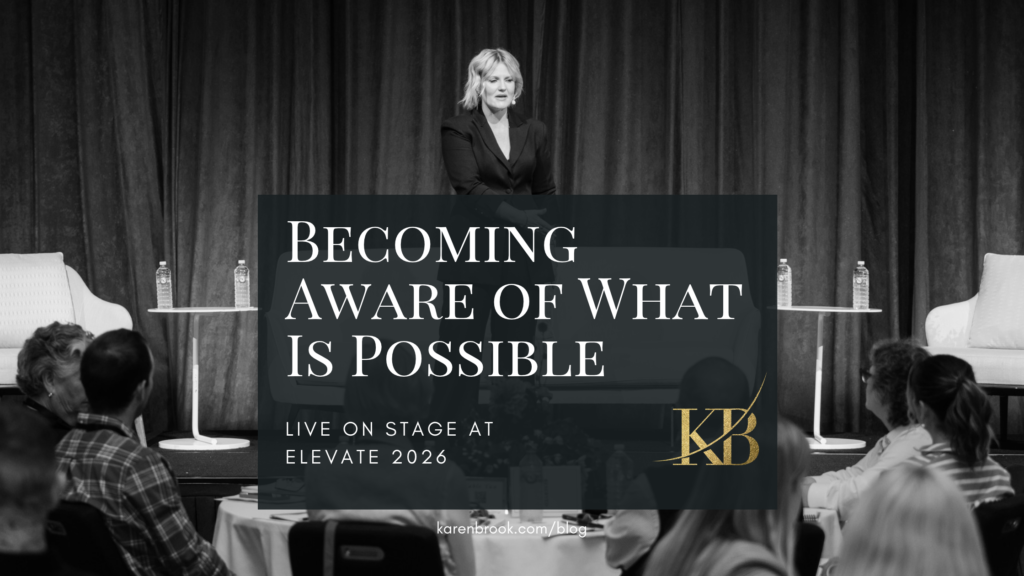
During ELEVATE 2026, I shared a story from the book You2 about a fly repeatedly flying into a windowpane, desperately trying to find its way outside. It can see where it wants to go, and despite the resistance it encounters, it continues applying more effort in exactly the same direction.
Yet just a short distance away, there’s an open door that would allow the fly to escape with very little effort at all.
The problem isn’t that the fly isn’t trying hard enough; it’s that it hasn’t become aware of another possibility.
I think this is something many of us can recognise in our own lives, particularly when we’re working towards an important goal or trying to move beyond a result that has remained relatively unchanged for some time.
We become so familiar with our current way of operating that our natural response to wanting more is to do more. We work longer hours, increase our activity, place greater pressure on ourselves and continue applying the same strategies, believing that eventually the additional effort will produce the breakthrough we’re looking for.
Sometimes the answer isn’t to work harder at what we’re already doing. Sometimes we need to take ten steps to the left, look at our circumstances from an entirely different perspective and become aware of an opportunity that wasn’t visible from where we were standing.
When we allow ourselves to think differently, we create the opportunity for new ideas to emerge, and those ideas can take us far beyond what we might have considered the next logical step.
This is one of the reasons I place such importance on creating space for new thinking, whether through study, conversations, new experiences or spending time in environments that encourage us to look beyond our present circumstances.
Are You Setting Goals Based on What You Know or What You Want?
One of the most important distinctions I teach is the difference between A-type, B-type and C-type goals, because understanding these three approaches can fundamentally change the way you think about your future.
An A-type goal is something you already know how to achieve because you’ve done it before. It may require some effort and discipline, but it doesn’t necessarily demand that you think, feel or act in a fundamentally different way.
A B-type goal is something you believe you can achieve based on your existing knowledge, capabilities and past results. You may not have achieved that exact outcome before, but you can see a reasonably clear path towards it, and it feels achievable within your current understanding of what’s possible.
A C-type goal, however, is something entirely different.
A C-type goal is what you really want, regardless of whether you currently know how to achieve it. It’s the goal that excites you, captures your imagination and may even feel like a fantasy because it sits so far beyond your present circumstances.
For many people, particularly those who have spent years developing their professional expertise and making responsible, considered decisions, this way of thinking can initially feel uncomfortable.
We’ve been conditioned to be realistic, to have a plan and to understand exactly how something will happen before we give ourselves permission to pursue it. As a result, we often dismiss our most exciting ideas before we’ve even allowed ourselves to explore them.
Yet the creative process of goal achievement begins with an idea, an image formed on the screen of your mind, long before you have the knowledge or resources required to bring it into physical form.
When I work with clients who are uncertain about what they want next, I encourage them to begin exploring possibilities without immediately deciding whether they’re practical. We might look at different areas of their life, consider what a significantly expanded result could look like and allow new ideas to stimulate their imagination.
The purpose isn’t necessarily to pursue every possibility that comes to mind, but to become aware of ideas that may never have occurred to them while they were focused entirely on their present circumstances.
You don’t need to know how to achieve something before you allow yourself to consider whether it’s what you would truly love.
The True Purpose of a Goal Is Growth
One of the most significant ideas I shared during this teaching is that the true purpose of a goal isn’t simply to achieve it; the true purpose of a goal is growth.
When you choose something you genuinely want, particularly something that requires you to move beyond your current level of awareness, you begin a process of developing the thinking, self-image and capabilities necessary to create that result.
You start to see yourself differently, become receptive to new opportunities and make decisions that may not have occurred to you when you were operating entirely within the boundaries of what you already knew.
This is why the process of pursuing a meaningful goal can be just as valuable as the achievement itself, because the growth you experience along the way becomes part of who you are and influences what you’re capable of creating next.
Earl Nightingale offered one of the most powerful definitions of success when he described it as the progressive realisation of a worthy ideal.
I love this definition because it reminds us that success isn’t something we suddenly become entitled to once we’ve achieved a particular financial result, purchased a home, built a business or reached a professional milestone.
The moment you make a committed decision to pursue a worthy goal and begin moving towards it, you’re already participating in the process of success.
As you grow, develop and expand your awareness, you naturally begin to experience greater fulfilment and a richer sense of purpose, not simply because of what you’re achieving, but because of who you’re becoming.
We don’t set goals merely to arrive at a destination where we imagine happiness will finally be waiting for us. We set goals because they give us a reason to grow, and it’s through that growth that we create a more enriched and fulfilling life.
A Guided Visualisation: What Do You Really Want?
Towards the end of this ELEVATE 2026 teaching, I guide the room through a visualisation designed to help participants move beyond their habitual thinking and become more aware of what they would genuinely love to create in their lives.
I’ve included this exercise in the recording because I believe it’s important that we do more than simply understand these ideas intellectually; we need to give ourselves the opportunity to apply them.
I encourage you to find somewhere quiet, have a journal nearby and allow yourself the final ten minutes of the video without interruption, so you can participate fully in the experience.
Throughout the visualisation, I’ll invite you to consider questions that encourage you to move beyond your current circumstances and explore what you might choose if the usual limitations were no longer part of your thinking.
If everything were possible, what would you love?
What would you choose if you knew you couldn’t get it wrong, and what might your life look like if you had all the time, money and resources necessary to create what you genuinely wanted?
These questions aren’t intended to produce an immediate answer or a perfectly defined goal. They’re designed to help you become receptive to the thoughts, images and ideas that may emerge when you give yourself permission to imagine something different.
When the visualisation concludes, I encourage you to take out your journal and begin writing in the present tense, using positive language to describe what came to mind and what you would love to experience.
Don’t concern yourself with whether the ideas are realistic or how you might achieve them, because at this stage, the purpose isn’t to develop a detailed plan or make a final commitment.
It’s simply to become more aware of what’s possible for you.
From that expanded awareness, you can begin to identify what genuinely resonates, consider the direction you would love to pursue and ultimately make a committed decision about what comes next.
Watch the live teaching from ELEVATE 2026
Give Yourself the Opportunity to Think Beyond Your Present Results
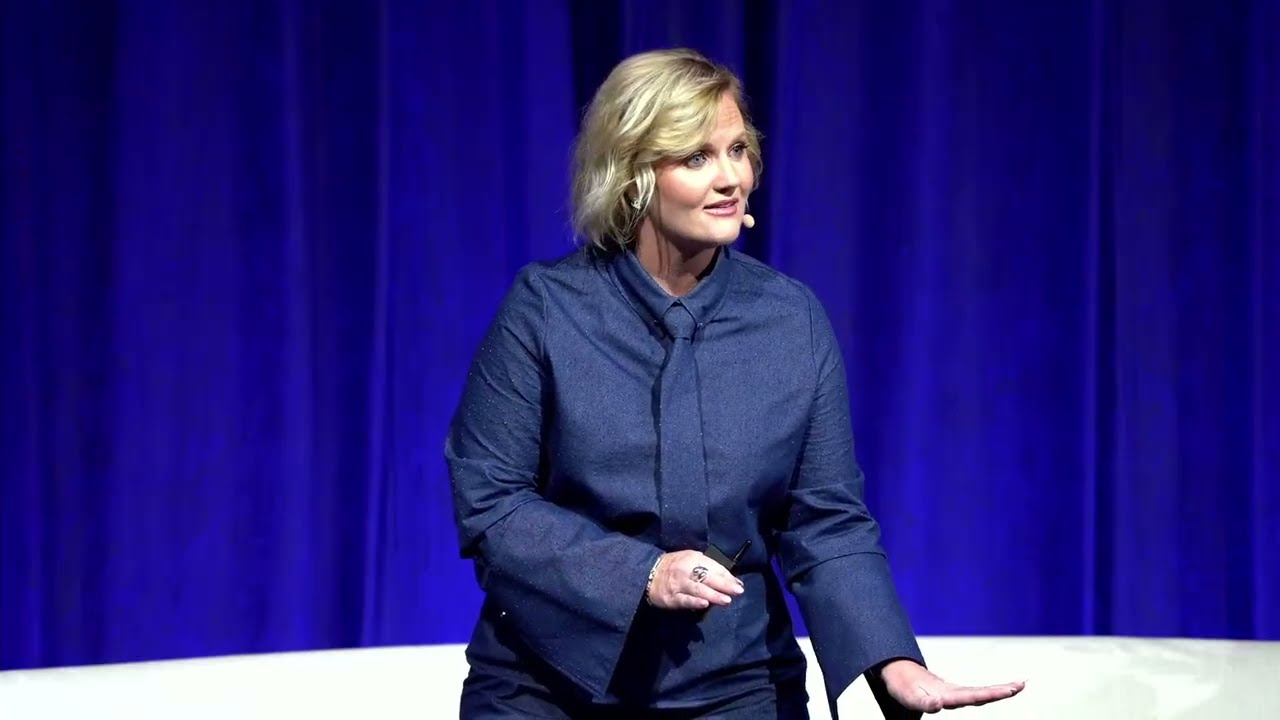
One of the reasons I created ELEVATE was to provide an environment where people could step away from the demands and routines of everyday life and spend meaningful time considering what they really want, both personally and professionally.
When we’re immersed in our usual responsibilities, it’s easy to become consumed by immediate priorities, existing commitments and the results we’re currently working towards, leaving very little space to consider whether there’s an entirely different level of possibility available to us.
When we place ourselves in a room with people who are thinking, growing and pursuing meaningful goals, something begins to change.
We become exposed to new ideas, different perspectives and conversations that challenge the way we’ve been looking at our circumstances, and through those experiences, we often discover possibilities we wouldn’t have considered on our own.
Sometimes one new idea, one meaningful conversation or one decision can change the direction of the next ten years of your life.
On 5th and 6th February 2027, we’ll come together again at The Langham, Gold Coast, where I’ll be joined by Brian and Cory Proctor for two days dedicated to expanding your awareness, developing your self-image and understanding how to move beyond your present results.
Whether you’ve already achieved considerable success in your business or career, or you’re beginning to consider what a new chapter of your life might look like, ELEVATE is an opportunity to give yourself the time, space and environment to explore what’s next.
Early-bird registration for ELEVATE 2027 closes this Saturday, 31 October 2026, and ticket prices will increase after this date.
If you’ve been considering joining us, I encourage you to make the decision, invest in your continued growth and secure your place while early-bird pricing is still available.
Secure your place at ELEVATE 2027: www.karenbrook.com/elevate
Explore The ELEVATE Frequency Club: https://karenbrook.com/the-elevate-frequency-club-with-karen-brook
Want to learn more? Explore my free trainings here: www.karenbrook.com/free-trainings